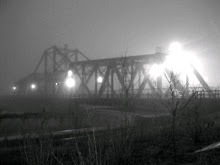
I haven't posted in quite awhile just been very busy and I need a new digital camera so till I get a new cam I'll try to post some old pictures . There is a lot going on in the Neighborhood with church closings garden walks and summer projects so when I find the time I'll try and post something new. This week in BR/R history- On July 15th 1950 Buffalo's 13th annual soap box derby was held for the first time in Riverside, July 16th 1950 Black Rock / Riverside centennial was observed, July 19th 1978 the 50th annual BR picnic and play day @ Crystal Beach was held . Michael Geraci and Albert Weber were honored as the oldest members. "My pet rock is Black Rock"
Tuesday, July 17, 2007
Been Busy
I haven't posted in quite awhile just been very busy and I need a new digital camera so till I get a new cam I'll try to post some old pictures . There is a lot going on in the Neighborhood with church closings garden walks and summer projects so when I find the time I'll try and post something new. This week in BR/R history- On July 15th 1950 Buffalo's 13th annual soap box derby was held for the first time in Riverside, July 16th 1950 Black Rock / Riverside centennial was observed, July 19th 1978 the 50th annual BR picnic and play day @ Crystal Beach was held . Michael Geraci and Albert Weber were honored as the oldest members. "My pet rock is Black Rock"


Sunday, July 1, 2007
School 60
 The kids in the photo are of Buffalo public school children around the turn of the century
{ last century of course}.
The kids in the photo are of Buffalo public school children around the turn of the century
{ last century of course}.
Wednesday, June 20, 2007
Fresh look for an old place.
 Gondola's over at the corner of Niagara & Austin is getting a fresh paint job it's looking good and almost done this is a before picture I will update with some new pics when the job is completed .
Monday, May 21, 2007
"Thats what your supposed to do"

Thats what Dennis {PHOTO} said to me this weekend as I took a walk around the Neighborhood taking some pictures. I met up with Dennis near the old Engine 15/Creeley homestead at Amherst and East Streets more on the Firehouse at a later date. This Wen May 23rd 6:15 pm at the North West Buffalo Community Center you to can take a stand and join in on the conversation with the GNPA. This weeks meeting is with Tops store Manager Dave Zoldos about the many many Tops shopping carts that are left all over the BR/GA area on a daily basis .
Dennis and his family life long Black Rock resident's once considered a move out of the city but stayed and instead of complaining about Quality of life issues he has quietly been doing something about it "Thats what your supposed to do". Like myself he says it's not about him it's about the community so he does his part as a resident not expecting his name in lights and not expecting Extra credit.
So when you see Dennis or the many others like him that make our Community a unique and proud place to live don't ask what are you doing that for? how much you getting paid for that? Stop grab a brush or a broom and lend a FREE hand "Thats what your supposed to do". B.R.A
Thursday, May 17, 2007


Wednesday, May 9, 2007


Friday, May 4, 2007


Buffalo ReUse
 TAKEN FROM BR
The final debris were cleared away last night from 26 Lombard St., where just days ago another house stood neglected in its East Side neighborhood. But, thanks to Buffalo’s newest non-profit, this house fell by deconstruction, not total demolition. So instead of wasting away in a landfill, many of the home’s remains will find new life in other corners of the city. And the lot where the house once stood will likely become a garden for its very happy, horticulturally-blessed neighbor.
TAKEN FROM BR
The final debris were cleared away last night from 26 Lombard St., where just days ago another house stood neglected in its East Side neighborhood. But, thanks to Buffalo’s newest non-profit, this house fell by deconstruction, not total demolition. So instead of wasting away in a landfill, many of the home’s remains will find new life in other corners of the city. And the lot where the house once stood will likely become a garden for its very happy, horticulturally-blessed neighbor. Volunteers with Buffalo ReUse took down the house, their first deconstruction attempt, in just four days. With 6-8 volunteers working each day, through the rain and mud, the group completely dismantled the building to ground level and successfully recycled 1,000s of pounds of material. All the salvaged material will be on sale at their Ellicott Street warehouse this Sunday.
The crew worked under the supervision of national deconstruction consultant David Bennink, of Re-Use Consulting, who has been guiding the founding members along their journey. He has clients from coast-to-coast who are trying to change the way societies look at their buildings and their resources.
Michael Gainer, executive director of Buffalo Re-Use, brought Bennink in to teach the new group techniques for deconstruction, which will continue to evolve with each new project.
"Now we know we can do it,” Gainer said upon completion Monday. “It's challenging but meaningful work. I think we're really ready to put this idea into motion and fulfill our mission."
The very triumphant, yet very tired, group will set out to dismantle their second home, on Wasson Street, on May 18.
Buffalo ReUse’s warehouse at 459 Ellicott St. will be open from noon to 3 p.m. this Sunday, May 6. Check here for a list of their salvaged inventory.
Saturday, April 28, 2007
Tenant Market

TenantMarket helps you find the right tenant fast by matching your property listing with actual renters' profiles.
Monday, April 16, 2007
Black Rock Academy PS:# 51 set to RE open!
 Black Rock Academy PS:# 51 is set to re open for the start of next years academic school year and remain open for at least 2 years. The purpose for the reopening after closing nearly 3 years ago is do to the major remodeling of nearby Riverside Institute of Technology High School set to begin this summer and be completed in 2-3 year time frame and the need to temporarily house the nearly 750 students.
- While School #51 is not large enough to house the entire population of R.I.T it will comfortably hold the Freshmen and Sophomore classes of about 400 students.

- While this is good news for one of our vacant Neighborhood buildings it is only temporary and is offset by the closers of other large facility's as i first wrote about {HERE} in the area such as St. John the Baptist R.C Church 60 Hertel Av. Or the soon to be closed St. Francis Xavier R.C Church at 149 East St.
- A comprehensive plain is needed for these large pilers in the Community some plans that have been successfully include the Nearly Demolished former St. Mary of the Sorrows Roman Catholic Church 938 Genesse St now the King Center Charter School. And the nearly completed Artspace Lofts 1219 Main St on the city's near East side. Link to other completed Artspace projects. Follow the construction of Artspace Buffalo {HERE} .
Monday, April 9, 2007
The Nickel City is indeed the Dyngus Day Capital of the World...no doubt!"

"In my travels and performances throughout the United States I have enjoyed the excitement of Dyngus Day in several cities and towns, however, no where is this holiday celebrated unilaterally and dynamically as it is in Buffalo, New York. The Nickel City is indeed the Dyngus Day Capital of the World...no doubt!" Lenny Gomulka, Polka Music Hall of Fame, Leader of Chicago Push, www.ChicagoPush.com

The New Urbanism

| |||
| |||
Tuesday, April 3, 2007
Sportsmen's Tavern
 Artvoice has a nice video story about The Sportsmen's Tavern 326 Amherst Street Black Rock New York. Good times for all and many types of music never a cover charge. {calender of events.}
Monday, April 2, 2007
What's with the pilers from the Skyway?

- Did somebody throw this rendering together over a night or was 10's of thousand's of dollars spent to do this. Whats with the Concrete pilers there ugly.
- $150 Million in taxpayer money for a retailer that sells a product that you can only use for six months out of the year doesn't seem right.
- In 1995 $150 in taxpayer money would have moved the Niagara section of the thruway inward to the Railway lands.
Sunday, April 1, 2007

Friday, March 30, 2007
I hope this guy doesn't win the lotto
 Click on photo to make larger
Quote taken from Free New York Blog
Click on photo to make larger
Quote taken from Free New York Blog
“Flippers”, as most practice today, ARE Sleazy.
"Jim–Doc Breem used to “flip” houses back in the 70’s. But not the way it’s done today. He’d buy them cheap, but rehab them using his own labor, time and materials, then either rent them out or sell them for a marginal to medium profit, depending on how much he had to put into the place to begin with.
Buying a property unseen, and selling it on E bay to some unsuspecting noid for profit is sleazy, no doubt. Worse yet, buying the property, stripping out the house of anything valuable, THEN selling it to some unsuspecting noid is the problem that Buffalo has.
Another problem Buffalo has is there are too many houses for the number of people left living there. Jim’s neighborhood is relatively new for Buffalo, it’s mostly a post WW2 built up area–but still makes it over a 60 year old neighborhood.
My mother’s house in Riverside was built in 1889–it was the 2nd house built on what was the Esser Farm. My dad remembers going out to that farm from Greeley St with his grandad with a horse and wagon to buy fresh eggs and chickens. But Much of the housing in Riverside was built in the era.
Many of the houses in Black Rock were built before 1870. My aunt’s house at 280 East St had the clapboards installed with wooden pegs instead of nails, and still had the gas jets in the walls for gas lighting. Now THAT’s old. But I digress.
If I hit the powerball tomorrow, one of the things I’d want to do is go into a neighborhood like Riverside, and start a new trend. Buy up all the houses on two streets (with backyards facing each other), tear all the houses down, and start over again. New Sewer and water lines, electric, phone and cable/internet lines underground, larger lots, and slightly larger, more comfortable homes that working families could afford. Gated and privately secured until I could afford to buy the next two streets.
The other big problem I see in neighborhoods like Riverside and Black Rock is absentee landlords. I know Joe Golombek agrees that they have ruined what was in our youth a vibrant neighborhood. When 3 of the 4 corners of Tonawanda and Ontario have gone from the Riverside Men’s Shop (at that spot for over 100 years), Rung’s Furniture (there almost as long) and Schnitzer’s Hardware (there for 80 years) to an empty storefront and 2 Rent-to-Own Stores, you know there’s an absentee landlord problem.
Section 8 tenants do no better a job of keeping up a neighborhood in rented homes than they did in public housing. It’s not theirs, and the government pays for them to live there, so why should THEY give a crap? So they don’t. And the neigborhood goes to hell. It’s truly a shame."
While what most of what is said is the truth the quote "Gated and privately secured until I could afford to buy the next two streets." how is a Gated Community good for the neighborhood ? I like many others choose to live here I am in a position to live pretty much where I want to I CHOOSE to live in a house that is 116 years old with a small garden no garage for the car your average 33' X 99' lot small front yard. I like most of my Neighbors owners and renters alike and most like me if I wanted to live with "New Sewer and water lines, electric, phone and cable/internet lines underground, larger lots, and slightly larger, more comfortable homes that working families could afford. Gated and privately secured until I could afford to buy the next two streets." I would move into a mac mansion in the Suburbs and live in a gated community close to someone much like yourself we probably wouldn't talk much but if we did we could talk about the OLDEN days in the hood and how great it was and how much of a shit hole it is now we can Monday morning QB about what we would do and what should be done and we can talk about those rental properties that we have in BR/R and how the ROCKERS trash them and how lucky we are that we don't live there damn they should level that whole place and start over again. But before we knock down those old drafty money pits we should strip out all that old woodwork and put it in one of those new Vinyl Victorians.
Monday, March 26, 2007
That green box on the corner
 Well it's a different color now Today I took two gallons of different color paint mixed it up and painted those Telephone company boxes on the corners of Dearborn & Austin and Dearborn at Amherst anybody wanna take bets on how long they will go before there tagged again.


Subscribe to:
Posts (Atom)